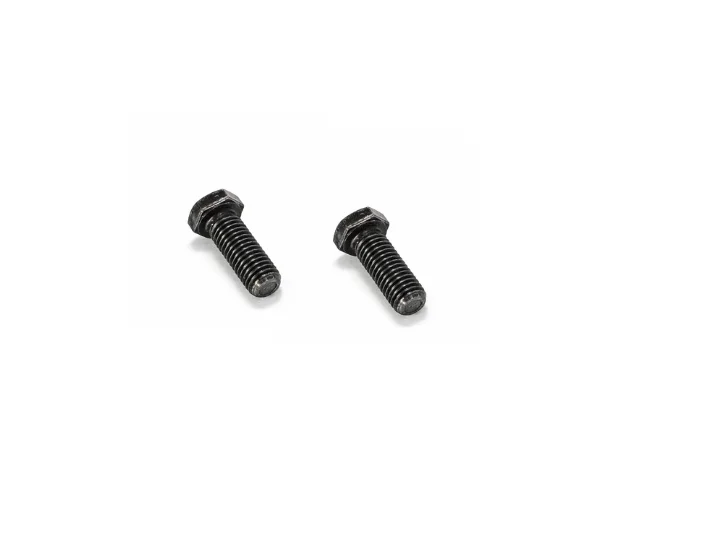
If you specify or procure fasteners for aerospace assemblies, using the wrong screw is not just a purchasing mistake. It can mean a failed inspection, a rejected build, or something far worse down the line. NAS1801 screws get called out in aerospace work constantly, and yet plenty of people grab them without fully understanding what makes them different from other machine screws on the shelf.
Let’s break it down.
What Is NAS1801?
NAS1801 is a National Aerospace Standard designation for a fully threaded machine screw with a hexagonal head and a Phillips cruciform cross recess. That dual-drive head is what sets this fastener apart immediately.
You can tighten or remove it with a socket wrench or nutdriver on the hex, or use a Phillips screwdriver on the cross recess when space is tight.
NAS1801 screws are fully threaded, non-structural machine screws that replace the older NAS1096 series. Non-structural means they are not designed for primary load-bearing joints. They secure panels, covers, equipment brackets, and other secondary attachments where load demands are lower. Get that classification wrong, and you have a compliance problem before anything else.
NAS1801 Specifications
NAS1801 screws are made from alloy steel per MIL-S-6049 with a cadmium finish per QQ-P-416 Type II and carry a tensile strength of 160,000 to 185,000 psi. Material can also conform to MIL-S-5000 or AMS6322, depending on the supplier.
Thread sizes include 4-40, 6-32, 8-32, and 10-32 in inch measurements. The full-thread design gives some flexibility on length selection, but do not mistake that for precision; you can skip.
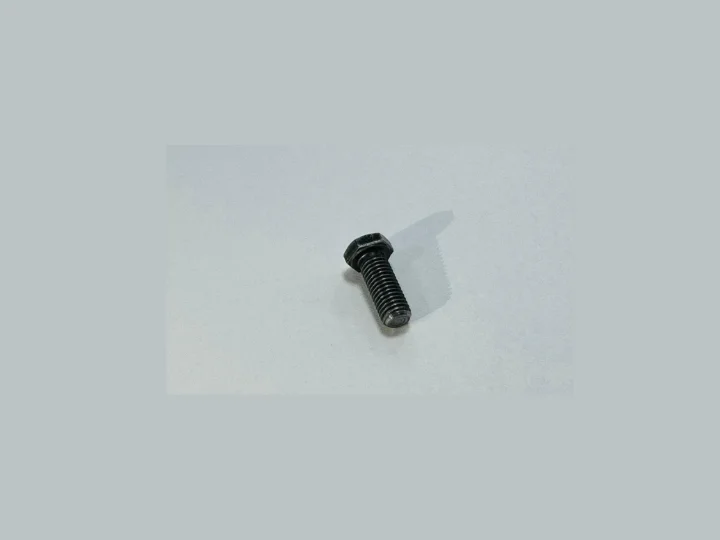
The cadmium finish does more than prevent rust. It reduces galling between the screw and mating threads during installation. In aluminium structures, where surface damage opens a path to corrosion, this matters more than people often give it credit. This is important in maintenance work, where the hex head allows a socket to be used for tightening while the cross recess is retained for initial installation and final removal. In the case of an aircraft, where the same panel may be opened dozens of times in the life of the plane, this is not a trivial consideration.
How to Read an NAS1801 Part Number
Part numbers follow a consistent format. Take NAS1801-08-12 as an example.
NAS1801 is the standard designation covering head type, drive, material, and finish. The next two digits indicate thread size, where 08 means 8-32 thread. The final digits give the length in 1/16-inch increments, so 12 means 12/16, which equals 3/4 inch.
So NAS1801-08-12 is an 8-32 x 3/4 inch Phillips hex head machine screw. For 4-40 thread, the designator is 04. For 6-32, it is 06. For 10-32, it is 3. This information can be used to avoid ordering mistakes, especially when under pressure.
Where NAS1801 Screws Get Used
The NAS1801 screws can be used in applications in the aerospace industry, especially in situations where there is a requirement for a screw that has been documented as being able to withstand repeated removals without stripping out the cross recess. The applications of the NAS1801 screw include situations in which there is a requirement for access panels, fairings, avionic trays, equipment brackets, cabin structures, ground support equipment, and defence applications.
These are not the fasteners holding the primary structure together. They are the ones keeping panels aligned, covers secured, and equipment mounted correctly. A loose panel from an improperly specified or installed screw is not just an annoyance. It is a maintenance finding with paperwork attached.
Read also: How Cargo Security Is Evolving with Real-Time Tracking and Smart Monitoring
Selecting the Right NAS1801 Screw
Here is what to verify before you order.
Thread size and grip length come first. NAS1801 screws are fully threaded, which helps when the grip length varies, but a screw that bottoms out before clamping the joint creates problems. Measure both.
Check galvanic compatibility. NAS1801 screws are cadmium-plated alloy steel. In contact with aluminium, this pairing is generally accepted in aerospace practice. The potential increases against bare stainless steel or titanium. Make sure your base material is correct before you order.
The drive access is something to think about before you start. The dual drive head earns its place in tight spots. If you need a Phillips drive to start with and a socket drive to finish with torque, this screw can deliver. That’s why most technicians prefer NAS1801 over pan-head screws like NAS623 for joints that need service frequently.
Only source from certified distributors. Be aware that counterfeiters are producing unapproved fasteners in the aerospace industry. Source your NAS1801 screws from AS9120 certified distributors and insist on a Certificate of Conformance with your order. The FAA has published an Advisory Circular AC 20-62E regarding suspect unapproved parts, which is worth reading if it’s in your sphere.
Finally, check the certification documents against the standard. Confirm MIL-S-6049 or MIL-S-5000 for material, and QQ-P-416 Type II for finish. Any deviation means the screw does not conform to NAS1801 and should not go into an aerospace assembly.